This support page focuses on work surface shape and reach for floating corner desks. Product comparisons belong on the main shortlist, while this page stays focused on setup decisions and daily small-room fit.
Work Surface Shape and Reach
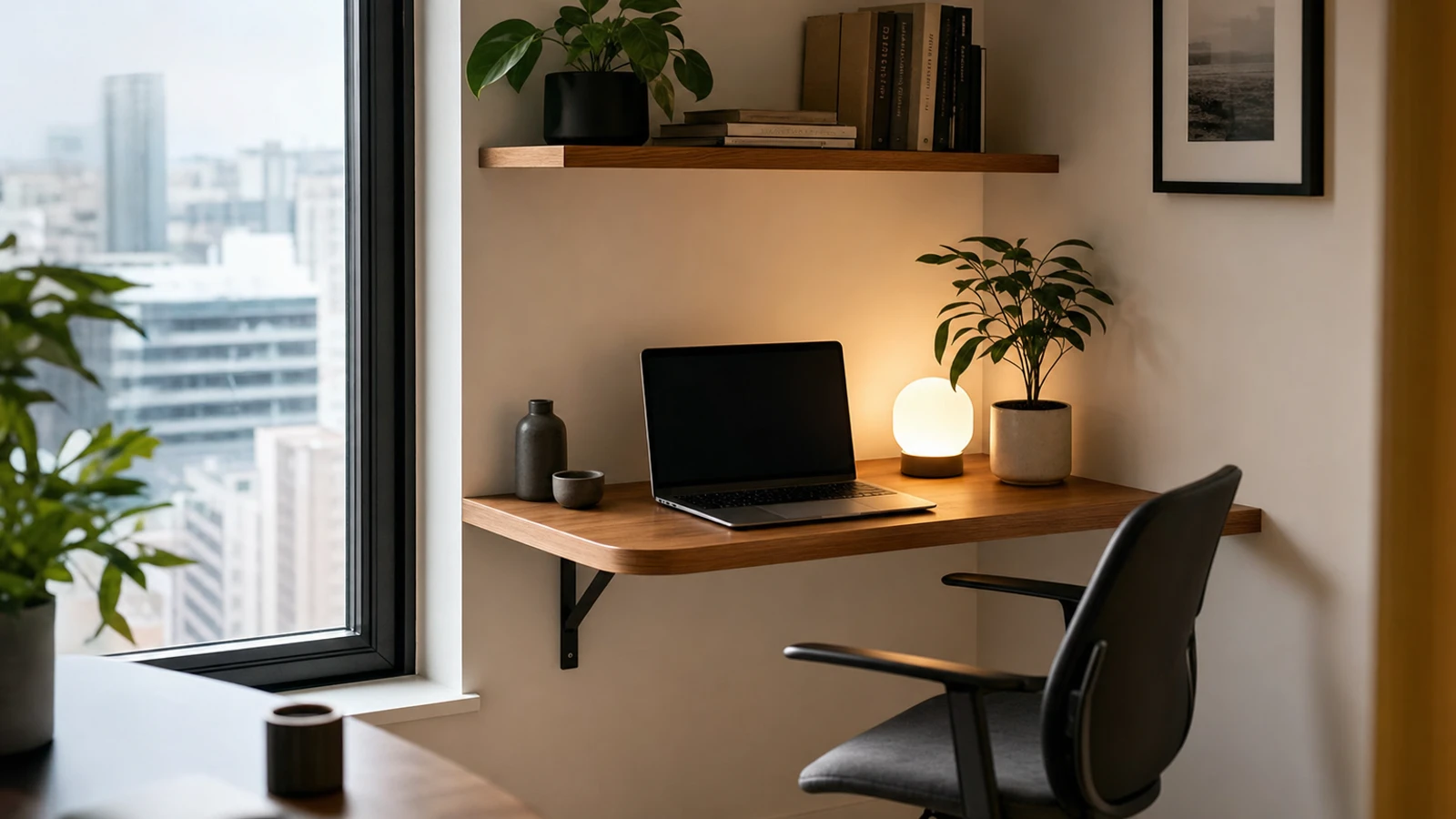
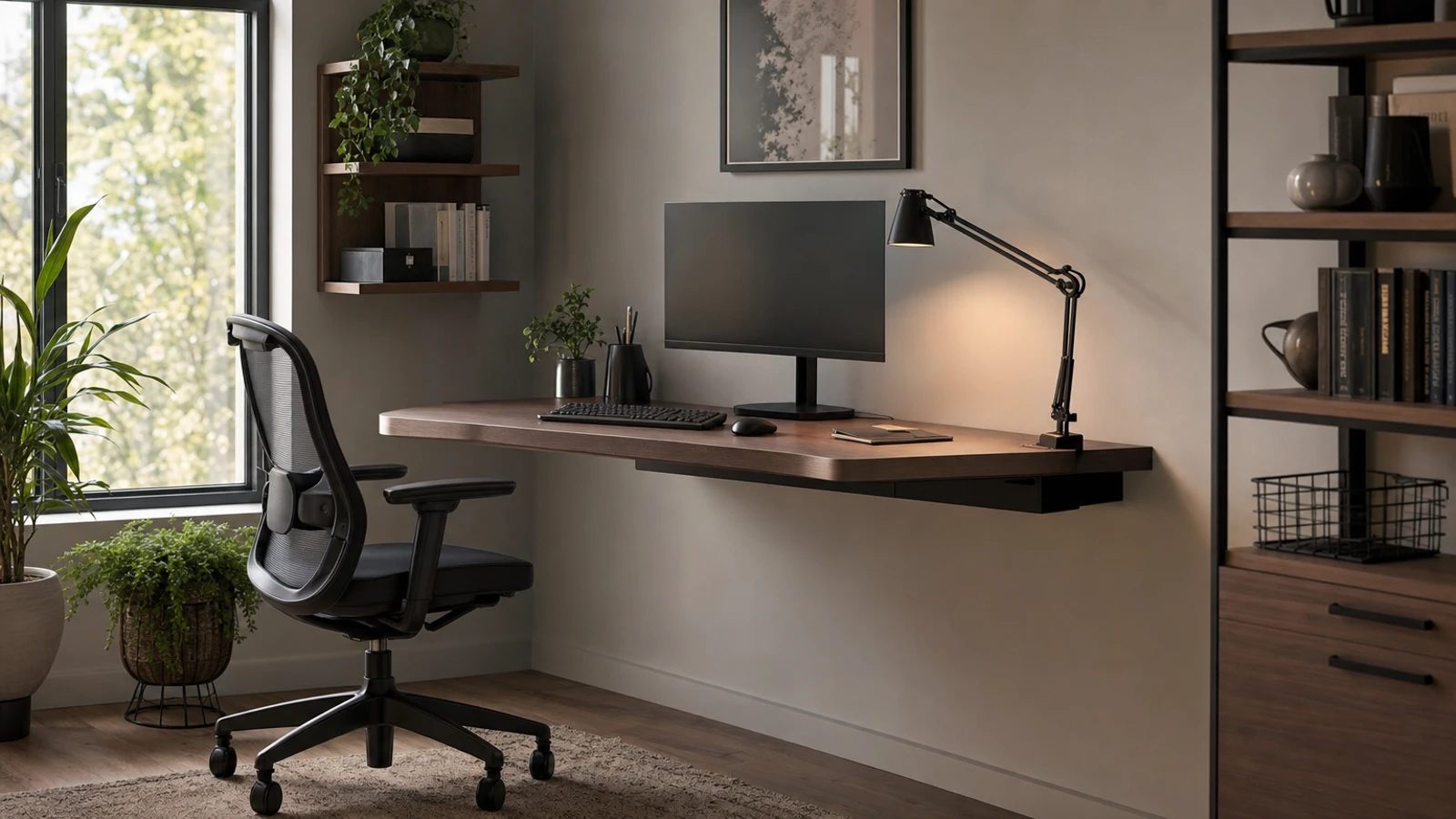
Reach and shape. A corner surface should put the laptop, mouse, notebook, lamp, and daily tools within easy reach without forcing twisted shoulders. Curved fronts, clipped corners, and rounded edges can make a small desk feel more natural.
Work Surface Shape and Reach should turn an unused corner into a calm working nook without crowding the room. Think about the wall strength, the sitter’s reach, the chair angle, nearby light, and whether daily work tools can stay organized on a compact surface.
For a practical check, tape the desk outline on both walls, place the chair where it will actually sit, mark the outlet path, and rehearse getting in and out of the corner before trusting a staged product photo.
Wall and bracket reality. For work surface shape and reach, confirm the wall construction before falling in love with a layout. Studs, masonry, hollow walls, anchors, bracket spacing, and the desk load limit all affect safety and long-term confidence.
Work Surface Shape and Reach should turn an unused corner into a calm working nook without crowding the room. Think about the wall strength, the sitter’s reach, the chair angle, nearby light, and whether daily work tools can stay organized on a compact surface.
For a practical check, tape the desk outline on both walls, place the chair where it will actually sit, mark the outlet path, and rehearse getting in and out of the corner before trusting a staged product photo.
Chair and knee clearance. A floating corner desk can save floor space, but the chair still needs room to pull back and knees still need a comfortable path under the surface. Tape the footprint on the wall and floor before buying.
Work Surface Shape and Reach should turn an unused corner into a calm working nook without crowding the room. Think about the wall strength, the sitter’s reach, the chair angle, nearby light, and whether daily work tools can stay organized on a compact surface.
For a practical check, tape the desk outline on both walls, place the chair where it will actually sit, mark the outlet path, and rehearse getting in and out of the corner before trusting a staged product photo.
Reach comfort. Corner desks can become awkward if the deepest point is hard to reach. Keep the laptop, mouse, notebook, lamp, and charging spot where the user can work without leaning into the wall or twisting all day.
Work Surface Shape and Reach should turn an unused corner into a calm working nook without crowding the room. Think about the wall strength, the sitter’s reach, the chair angle, nearby light, and whether daily work tools can stay organized on a compact surface.
For a practical check, tape the desk outline on both walls, place the chair where it will actually sit, mark the outlet path, and rehearse getting in and out of the corner before trusting a staged product photo.
Cable path and lighting. Plan where cords travel before installation. A small grommet, wall clip, nearby outlet, USB hub, or warm lamp can decide whether the final workspace looks intentional or improvised.
Work Surface Shape and Reach should turn an unused corner into a calm working nook without crowding the room. Think about the wall strength, the sitter’s reach, the chair angle, nearby light, and whether daily work tools can stay organized on a compact surface.
For a practical check, tape the desk outline on both walls, place the chair where it will actually sit, mark the outlet path, and rehearse getting in and out of the corner before trusting a staged product photo.
Verify current specs. This support page does not claim hands-on testing. Confirm dimensions, materials, wall-mount instructions, weight rating, included hardware, warranty, and return policy on the seller page before buying.
Work Surface Shape and Reach should turn an unused corner into a calm working nook without crowding the room. Think about the wall strength, the sitter’s reach, the chair angle, nearby light, and whether daily work tools can stay organized on a compact surface.
For a practical check, tape the desk outline on both walls, place the chair where it will actually sit, mark the outlet path, and rehearse getting in and out of the corner before trusting a staged product photo.
Curved Front. For work surface shape and reach, the curved front check gives the page a different practical job. Look at the room from the user position, then from the doorway, then from the wall where the desk will be fixed. A good floating corner setup should feel intentional before anything is drilled, ordered, or styled for a photo.
The useful question is not only whether the desk fits. It is whether curved front will still make sense after a week of normal work: opening a laptop, reaching for a notebook, charging a phone, standing up from the chair, cleaning the surface, and leaving the corner tidy at the end of the day.
Mouse Reach. For work surface shape and reach, the mouse reach check gives the page a different practical job. Look at the room from the user position, then from the doorway, then from the wall where the desk will be fixed. A good floating corner setup should feel intentional before anything is drilled, ordered, or styled for a photo.
The useful question is not only whether the desk fits. It is whether mouse reach will still make sense after a week of normal work: opening a laptop, reaching for a notebook, charging a phone, standing up from the chair, cleaning the surface, and leaving the corner tidy at the end of the day.
Laptop Angle. For work surface shape and reach, the laptop angle check gives the page a different practical job. Look at the room from the user position, then from the doorway, then from the wall where the desk will be fixed. A good floating corner setup should feel intentional before anything is drilled, ordered, or styled for a photo.
The useful question is not only whether the desk fits. It is whether laptop angle will still make sense after a week of normal work: opening a laptop, reaching for a notebook, charging a phone, standing up from the chair, cleaning the surface, and leaving the corner tidy at the end of the day.
Notebook Zone. For work surface shape and reach, the notebook zone check gives the page a different practical job. Look at the room from the user position, then from the doorway, then from the wall where the desk will be fixed. A good floating corner setup should feel intentional before anything is drilled, ordered, or styled for a photo.
The useful question is not only whether the desk fits. It is whether notebook zone will still make sense after a week of normal work: opening a laptop, reaching for a notebook, charging a phone, standing up from the chair, cleaning the surface, and leaving the corner tidy at the end of the day.
Elbow Room. For work surface shape and reach, the elbow room check gives the page a different practical job. Look at the room from the user position, then from the doorway, then from the wall where the desk will be fixed. A good floating corner setup should feel intentional before anything is drilled, ordered, or styled for a photo.
The useful question is not only whether the desk fits. It is whether elbow room will still make sense after a week of normal work: opening a laptop, reaching for a notebook, charging a phone, standing up from the chair, cleaning the surface, and leaving the corner tidy at the end of the day.
Rounded Edge. For work surface shape and reach, the rounded edge check gives the page a different practical job. Look at the room from the user position, then from the doorway, then from the wall where the desk will be fixed. A good floating corner setup should feel intentional before anything is drilled, ordered, or styled for a photo.
The useful question is not only whether the desk fits. It is whether rounded edge will still make sense after a week of normal work: opening a laptop, reaching for a notebook, charging a phone, standing up from the chair, cleaning the surface, and leaving the corner tidy at the end of the day.
Monitor Distance. For work surface shape and reach, the monitor distance check gives the page a different practical job. Look at the room from the user position, then from the doorway, then from the wall where the desk will be fixed. A good floating corner setup should feel intentional before anything is drilled, ordered, or styled for a photo.
The useful question is not only whether the desk fits. It is whether monitor distance will still make sense after a week of normal work: opening a laptop, reaching for a notebook, charging a phone, standing up from the chair, cleaning the surface, and leaving the corner tidy at the end of the day.
Task Spread. For work surface shape and reach, the task spread check gives the page a different practical job. Look at the room from the user position, then from the doorway, then from the wall where the desk will be fixed. A good floating corner setup should feel intentional before anything is drilled, ordered, or styled for a photo.
The useful question is not only whether the desk fits. It is whether task spread will still make sense after a week of normal work: opening a laptop, reaching for a notebook, charging a phone, standing up from the chair, cleaning the surface, and leaving the corner tidy at the end of the day.
Use the main hub and related support pages to compare corner workstation questions before choosing a desk.